smoke sculptures
Incense burning has a long history closely intertwined with human ritual and cultural practice. The word perfume derives from the Latin per fumum - “through smoke” - revealing the ancient connection between fragrance and smoke. To this day, incense is used in many cultures, not only in sacred contexts but also in everyday life. The relationship between smoke and object is deeply sensory and aesthetic, bringing together the material presence of sculpture and the immaterial, fleeting nature of smoke.
Smoke has accompanied humanity ever since the mastery of fire. Sonja Keppler’s smoke sculptures were inspired by research into ancient incense vessels in Greek museums, as well as by encounters with the traditional incense burner figures (Räuchermännchen) of Germany’s Ore Mountains. Drawing on the anthropomorphic and zoomorphic forms found throughout the history of incense vessels, she transforms these archetypal references into autonomous sculptural forms. Organic in structure and appearance, the works evoke both natural growth and ancient artifacts.
The sculptures are not merely objects to be viewed; they are activated through use and experienced through multiple senses. Created intuitively, they appear animated, as if communicating or possessing a life of their own.
The choice of materials reflects the central role of fire in the history of incense burning. Ceramic and bronze, both traditionally associated with incense vessels, feature prominently alongside concrete. In these works, the boundaries between art and design become fluid. Their archaic presence suggests forms emerging directly from the earth. The sculptures can be used with incense cones or charcoal, allowing fresh resins, herbs, and other aromatic materials to be burned within them.
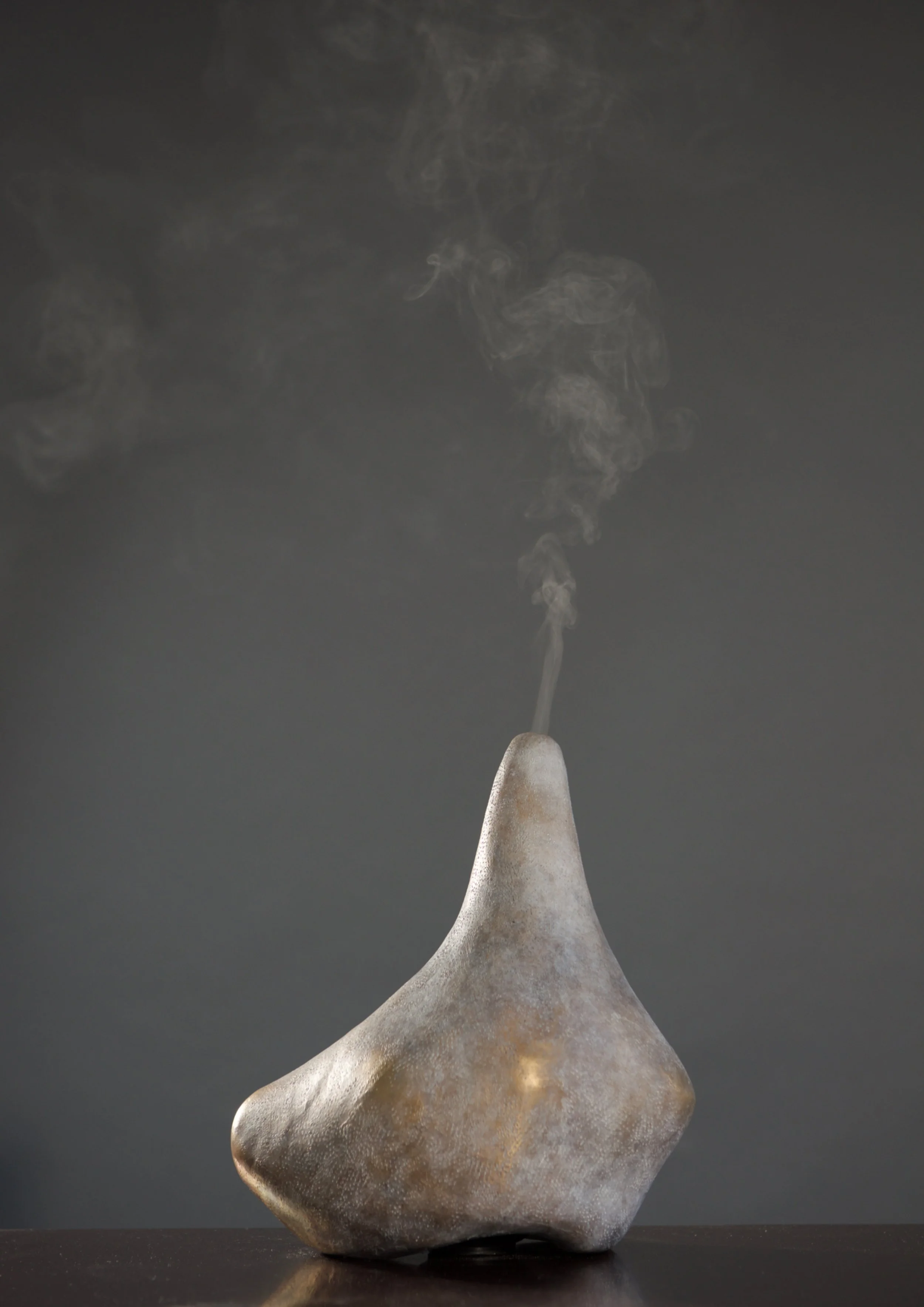
smoke sculpture I, bronze, 25x23x19 cm, 2020
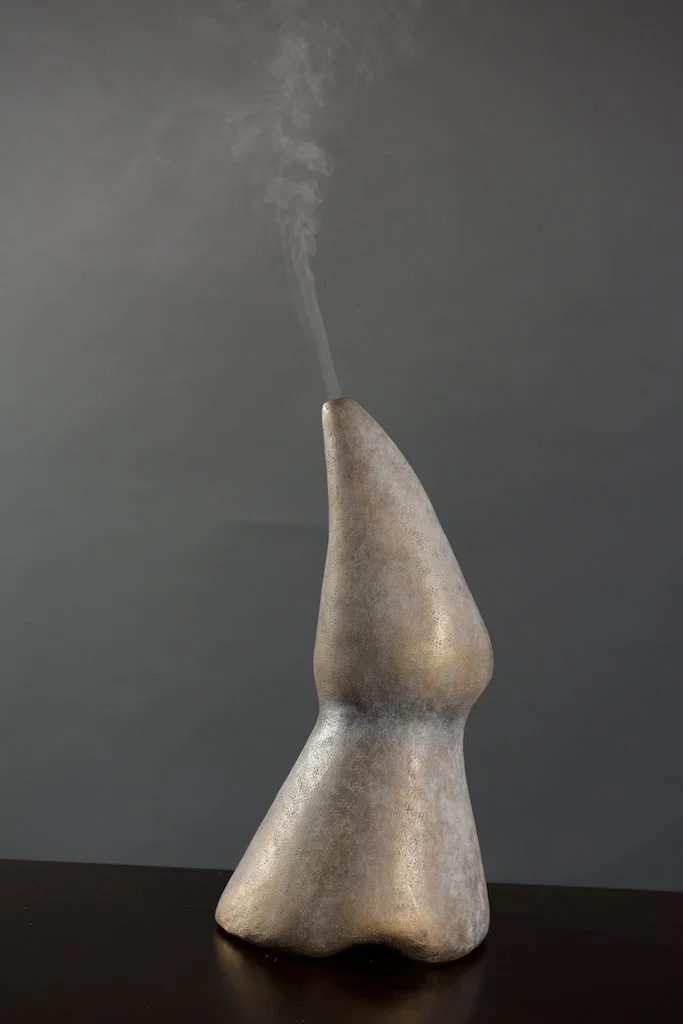
smoke sculpture III, bronze, 30×16x17 cm, 2020
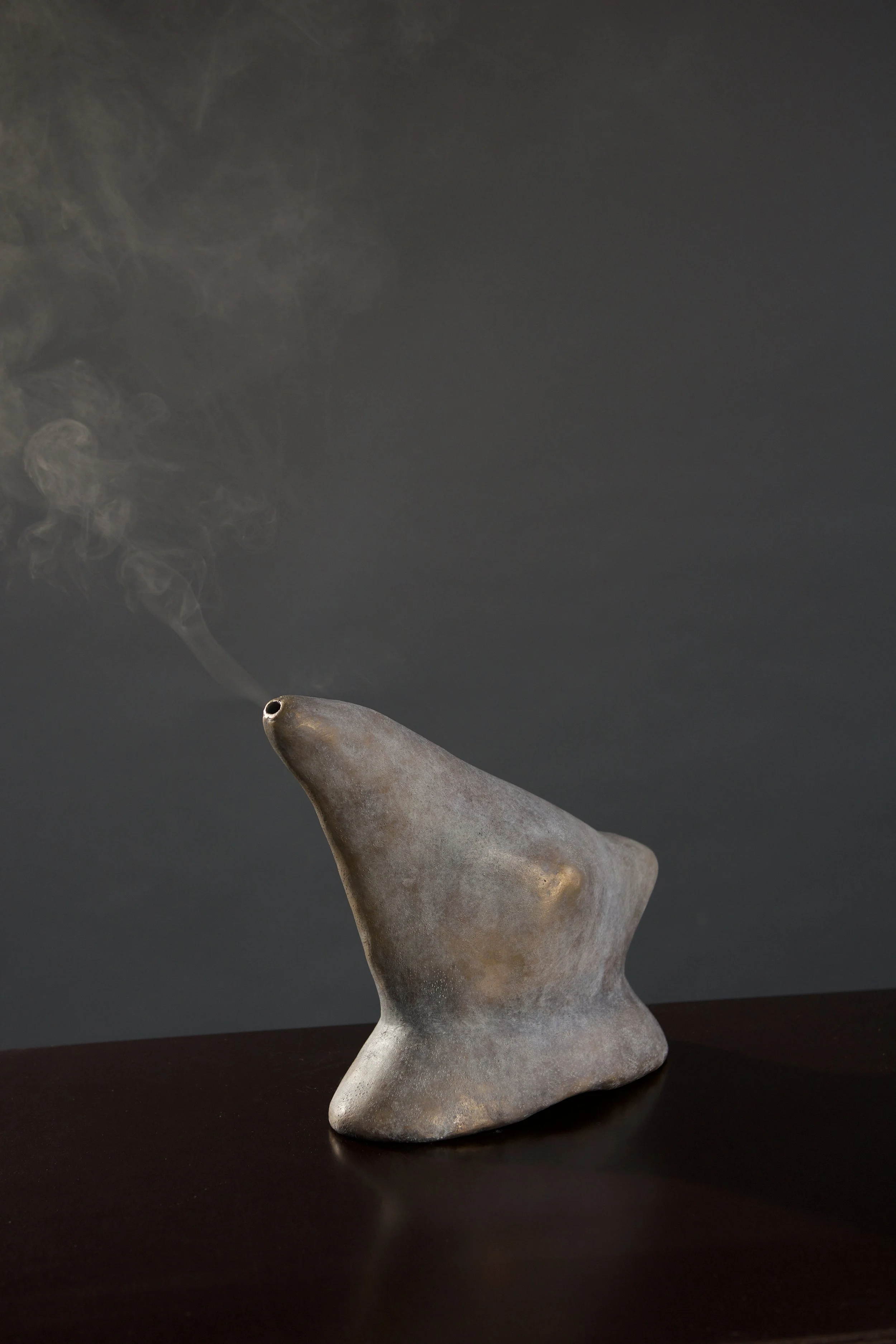
smoke sculpture II, bronze, 24×29 cm, 2020
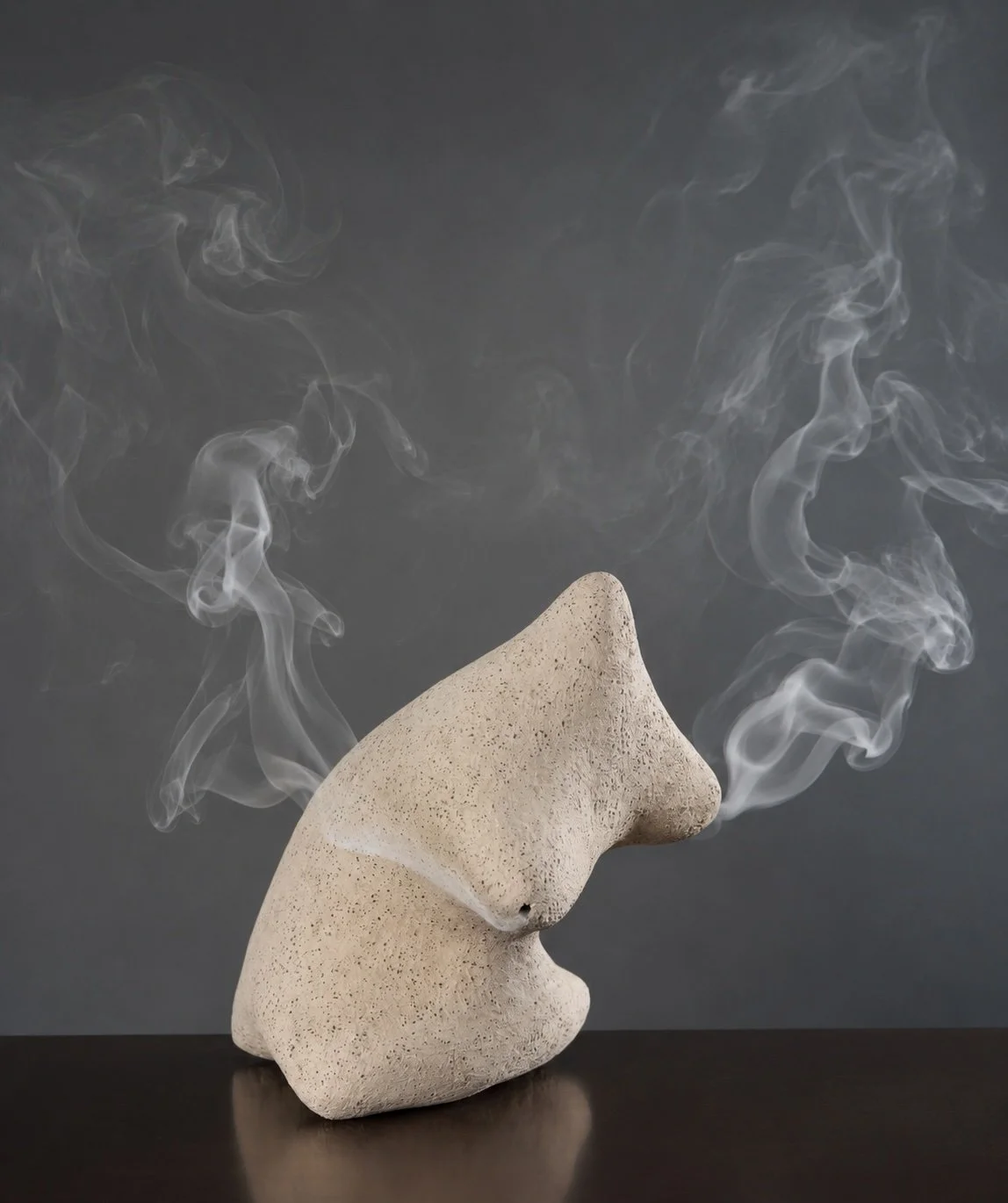
smoke sculpture IV, ceramic, 29x25x23 cm, 2020
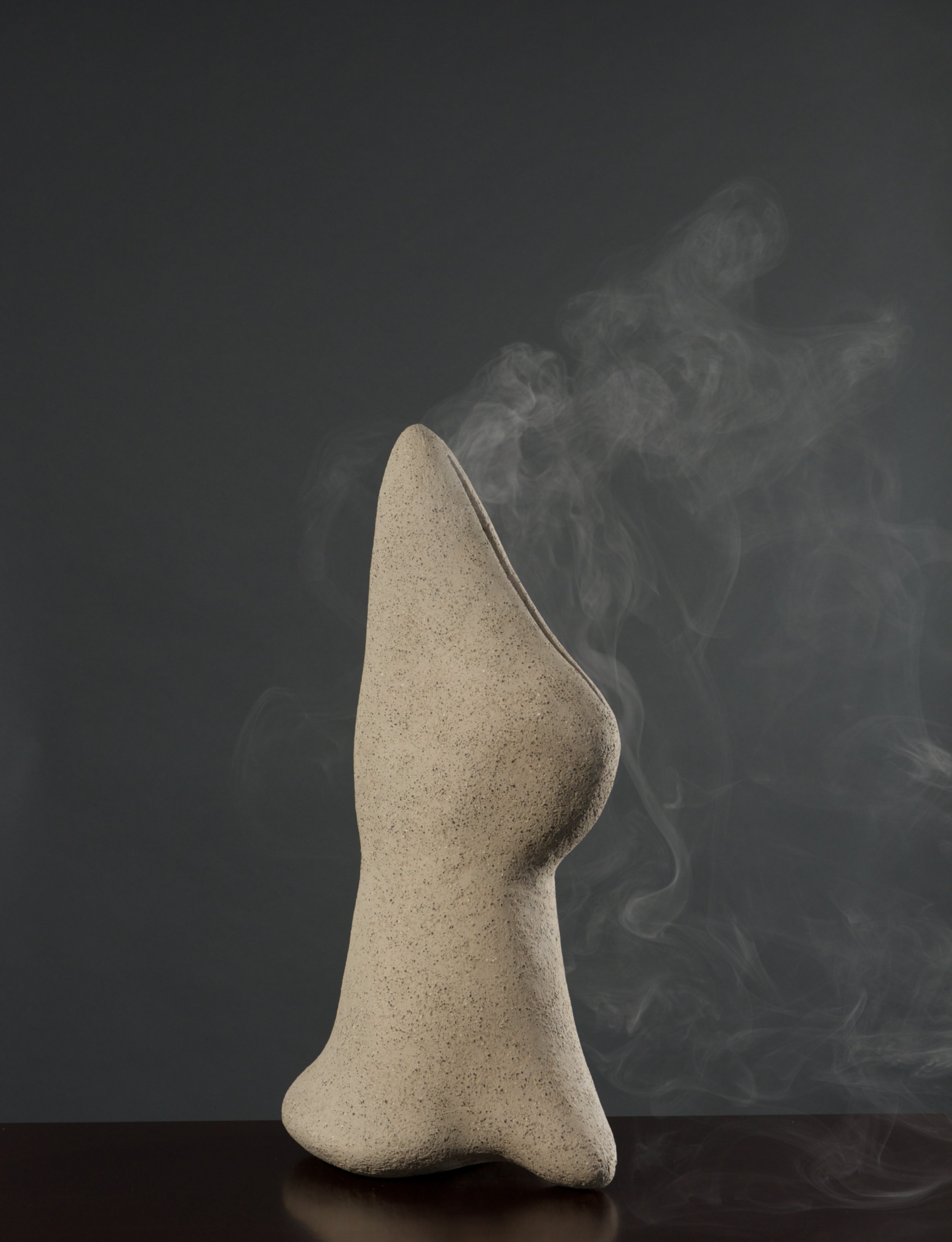
smoke sculpture VII, ceramic, 70×29×33 cm, 2020