ceramics
The organic ceramic works emerge within a field of tension between intentional design and unpredictable processes. Fire, heat, smoke, ash, and plant-based materials leave traces that can only be partially controlled, giving each piece its individual character.
The forms are not based on specific models but develop from observations of natural growth processes. They evoke seeds, corals, fossil structures, organic tissues, or unknown life forms. The surfaces are not created solely by the hand of the sculptor but through the interaction between material and firing process.
Of particular interest is the Japanese wood-fired kiln. During the many-hour firing process, the ceramics are exposed directly to flames, smoke, and ash. The ash settles on the surfaces, partially melts at high temperatures, and fuses with the clay body. This results in natural glazes, color gradients, and delicate markings that cannot be precisely predicted. The direction of the fire, the course of the firing, the position of the objects in the kiln, and the properties of the wood all influence the outcome. Each sculpture thus becomes a document of a unique event.
In addition to wood firing, Sonja Keppler works with the Raku technique. In this process, the objects are heated to approximately 1000 degrees Celsius and removed from the kiln while still glowing. A modified metal barrel serves as the firing chamber. Opening the kiln and encountering the glowing material directly turns the firing process into an immediate and physical experience. After removal, the hot ceramics are placed into containers filled with organic materials such as sawdust, straw, leaves, or paper. Due to the sudden exclusion of oxygen, reduction processes occur, producing characteristic black surfaces, metallic effects, and fine crackle patterns.
In this way, the ceramics become records of a process in which human action and natural forces interact. The surfaces tell of heat, transformation, and transience. They preserve traces of a controlled experiment that always leaves room for the unpredictable. In this dialogue between intentional form and processual emergence, objects arise that feel both archaic and contemporary, making the elemental force of fire visible.
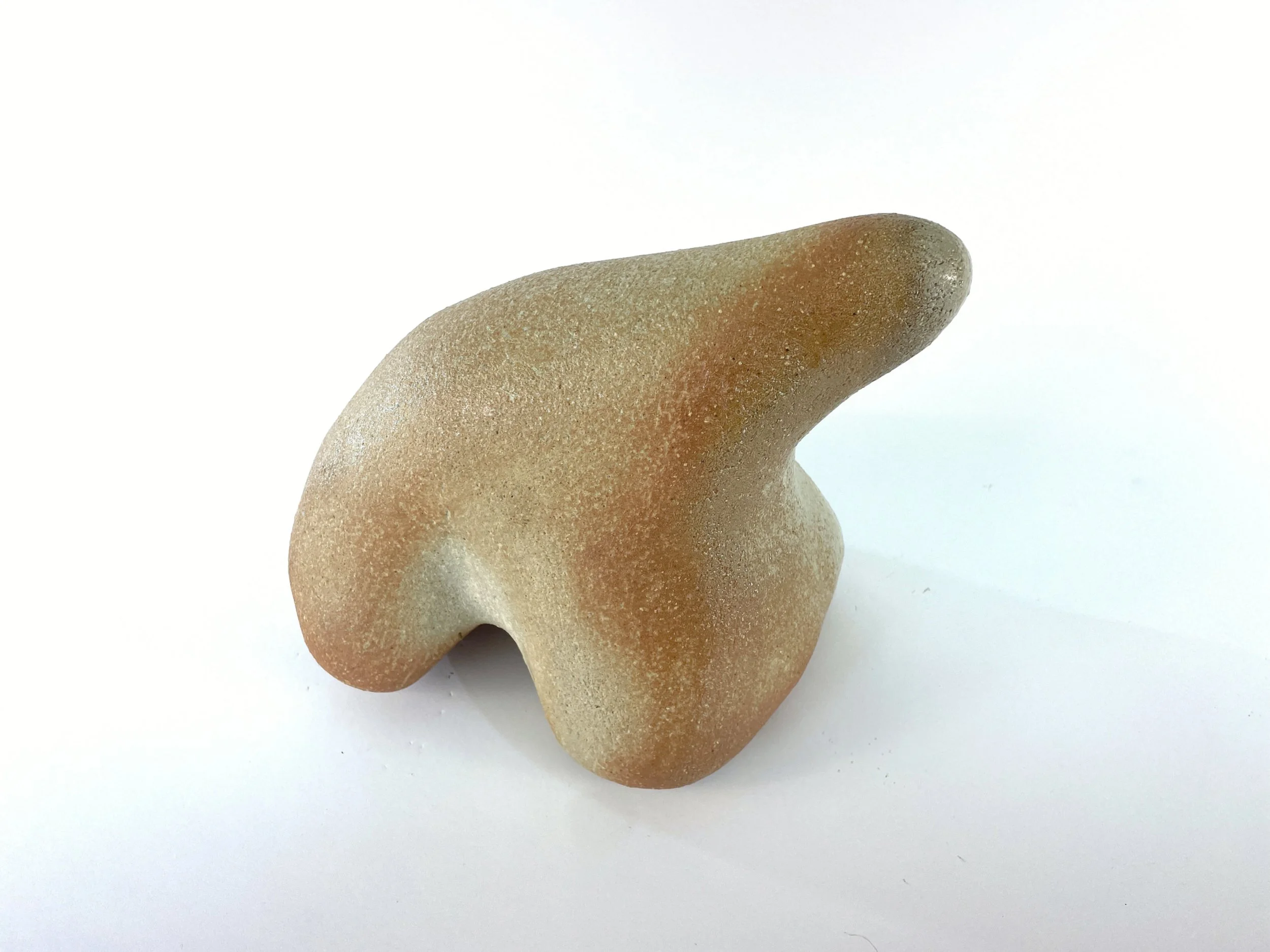
small animal, ceramic, japanese wood kiln, 21x20x18 cm, 2022
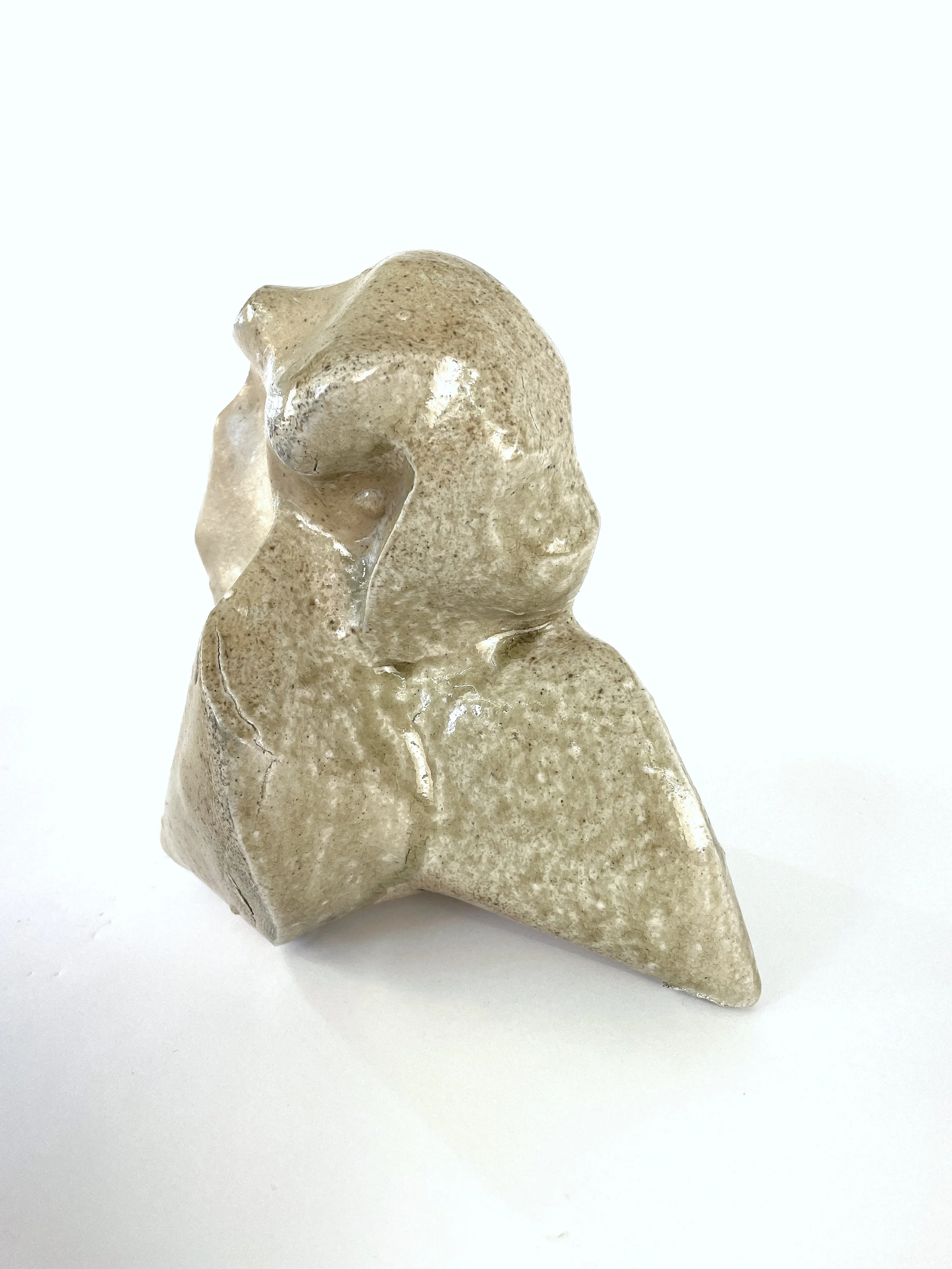
wavy ceramic object, ceramic, japanese wood kiln, 15x20x13 cm, 2021
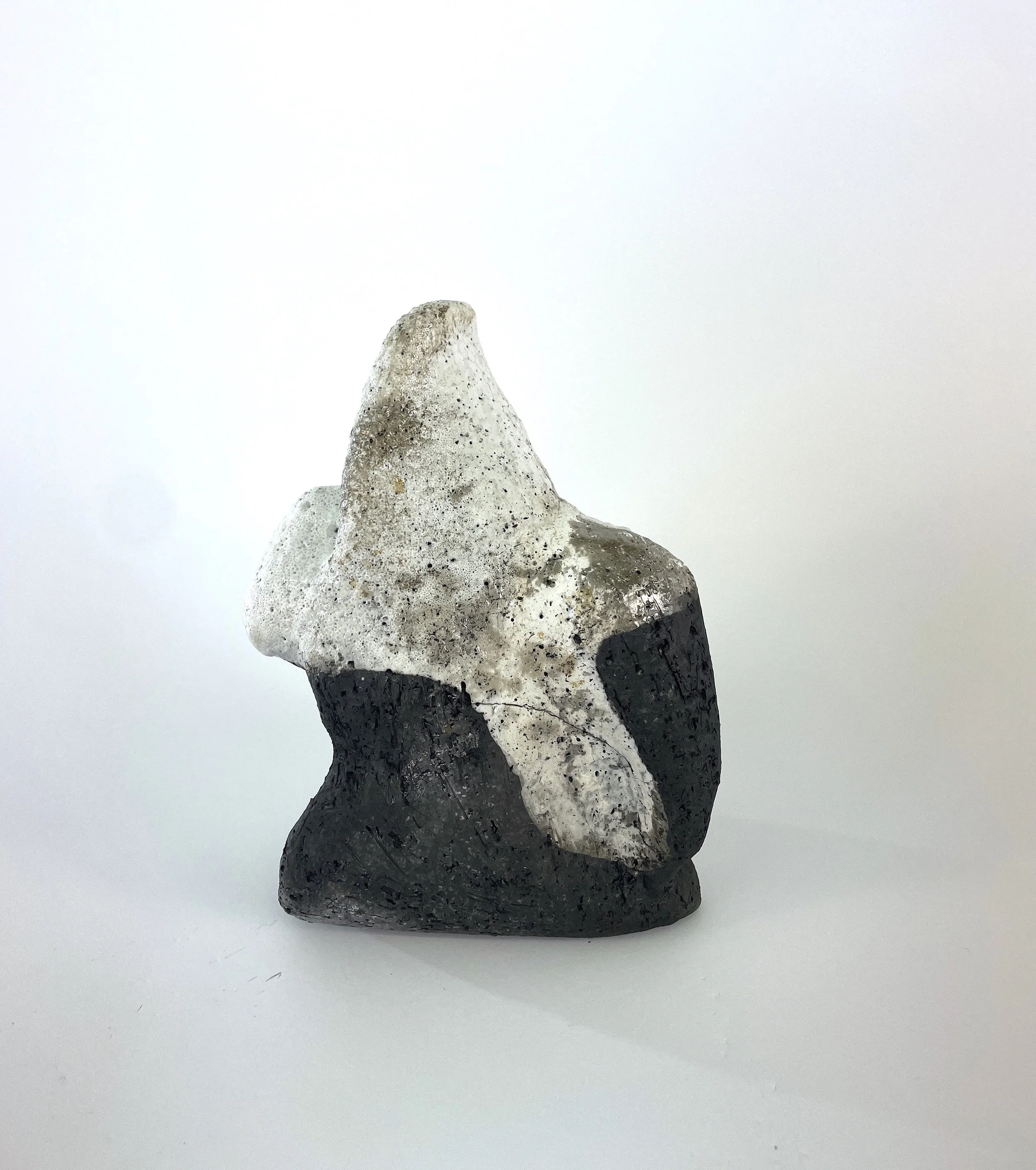
wavy raku object, ceramic, raku fired, 15x20x13, 2022
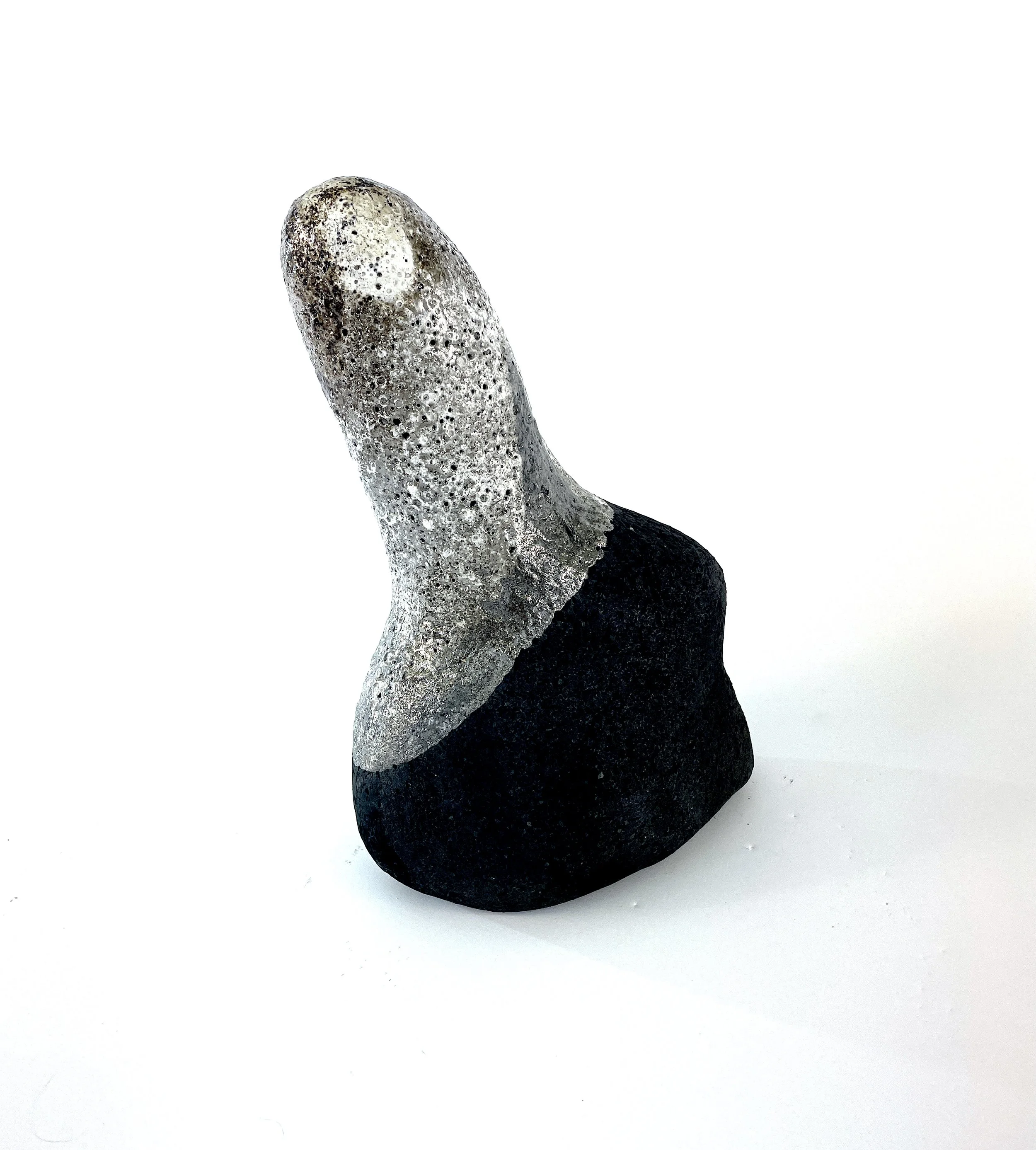
phallic raku object, ceramic, raku fired, 18x25x16 cm, 2022
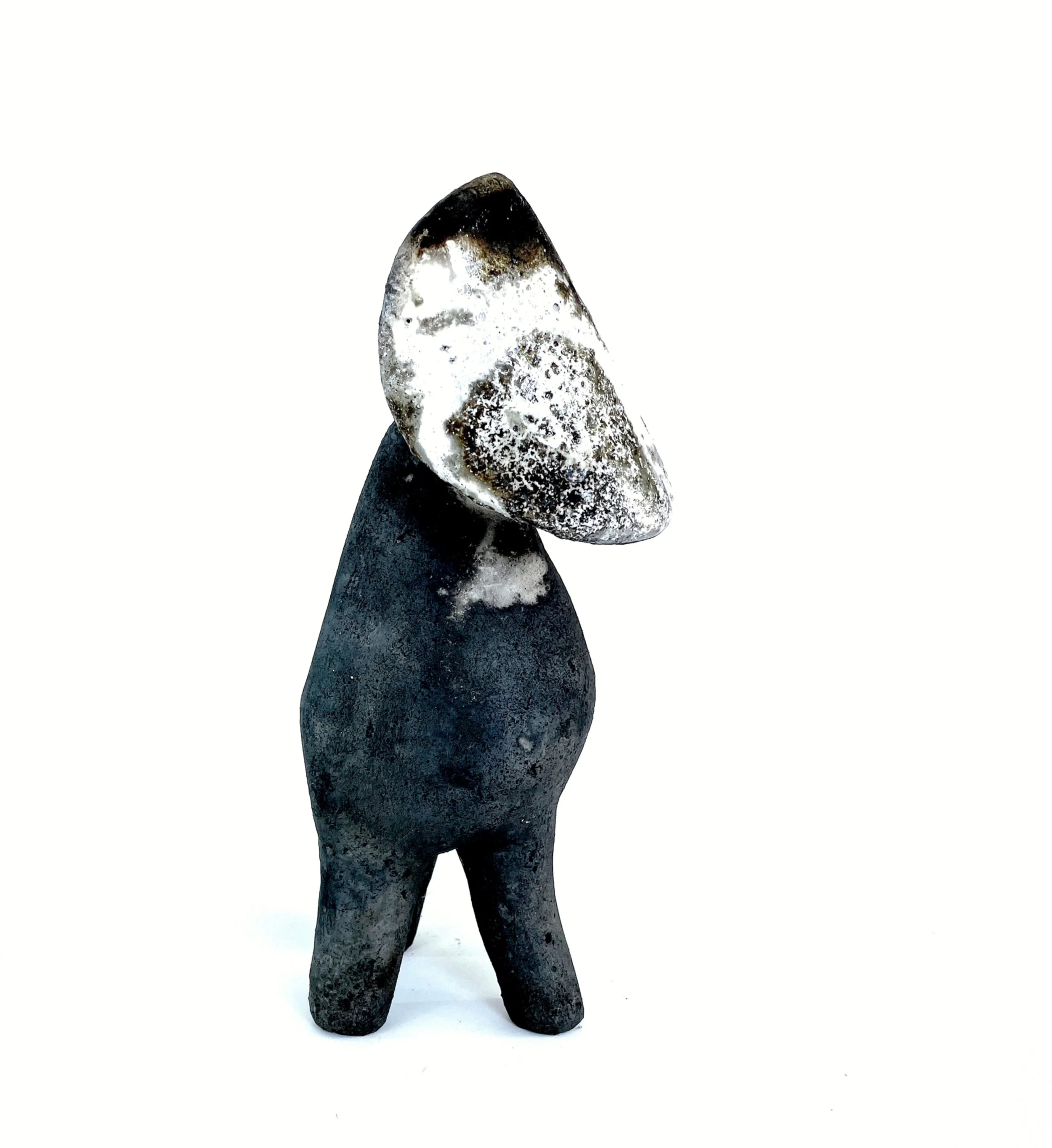
mushroom hat, ceramic, raku fired, 30×16x16 cm, 2021
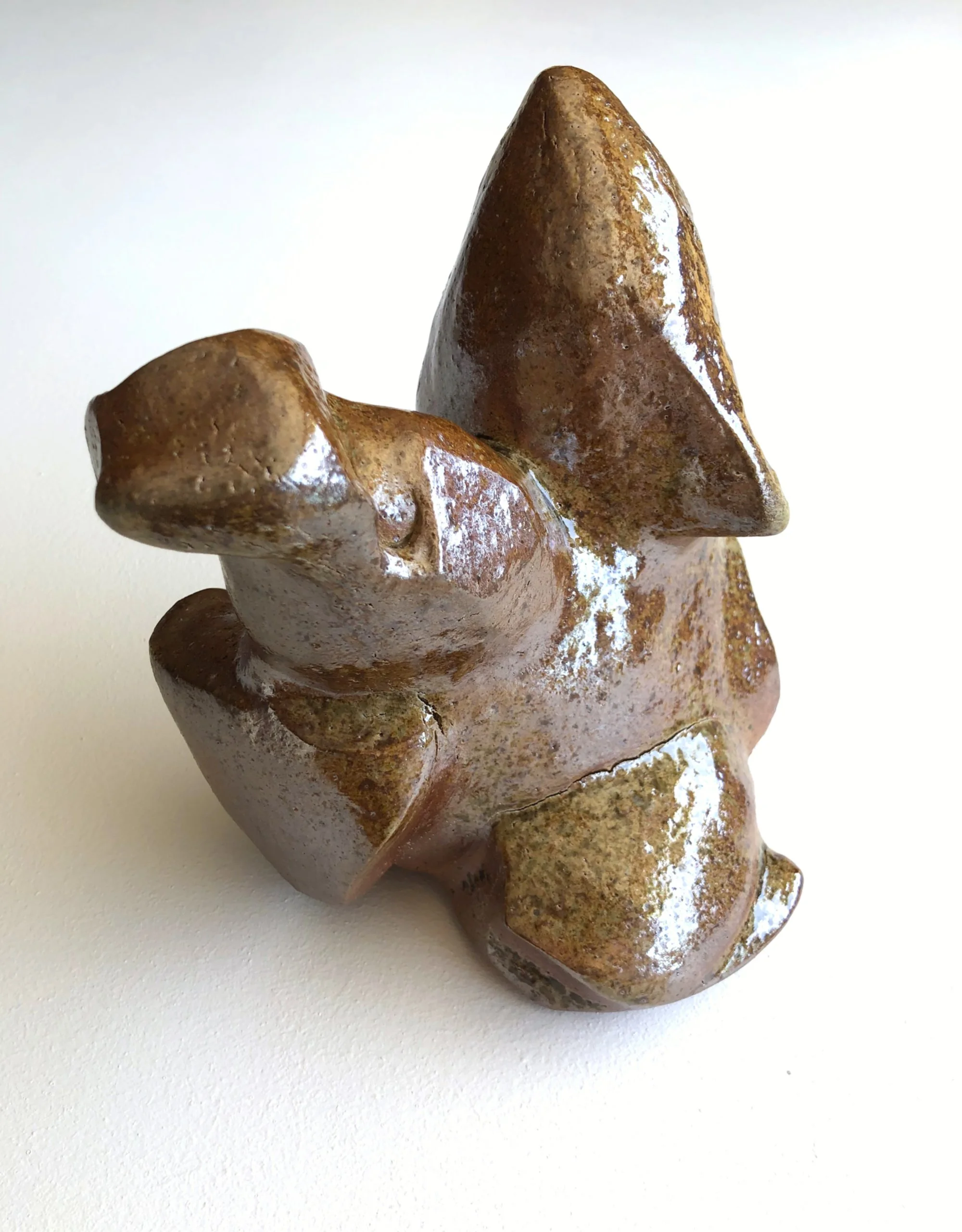
architectural object, ceramic, japanese wood kiln, 18x19x16 cm, 2022